---
title: Memory Operations
description: Understanding the core operations for managing memories in AI applications
icon: "gear"
iconType: "solid"
---
Mem0 provides two core operations for managing memories in AI applications: adding new memories and searching existing ones. This guide covers how these operations work and how to use them effectively in your application.
## Core Operations
Mem0 exposes two main endpoints for interacting with memories:
- The `add` endpoint for ingesting conversations and storing them as memories
- The `search` endpoint for retrieving relevant memories based on queries
### Adding Memories
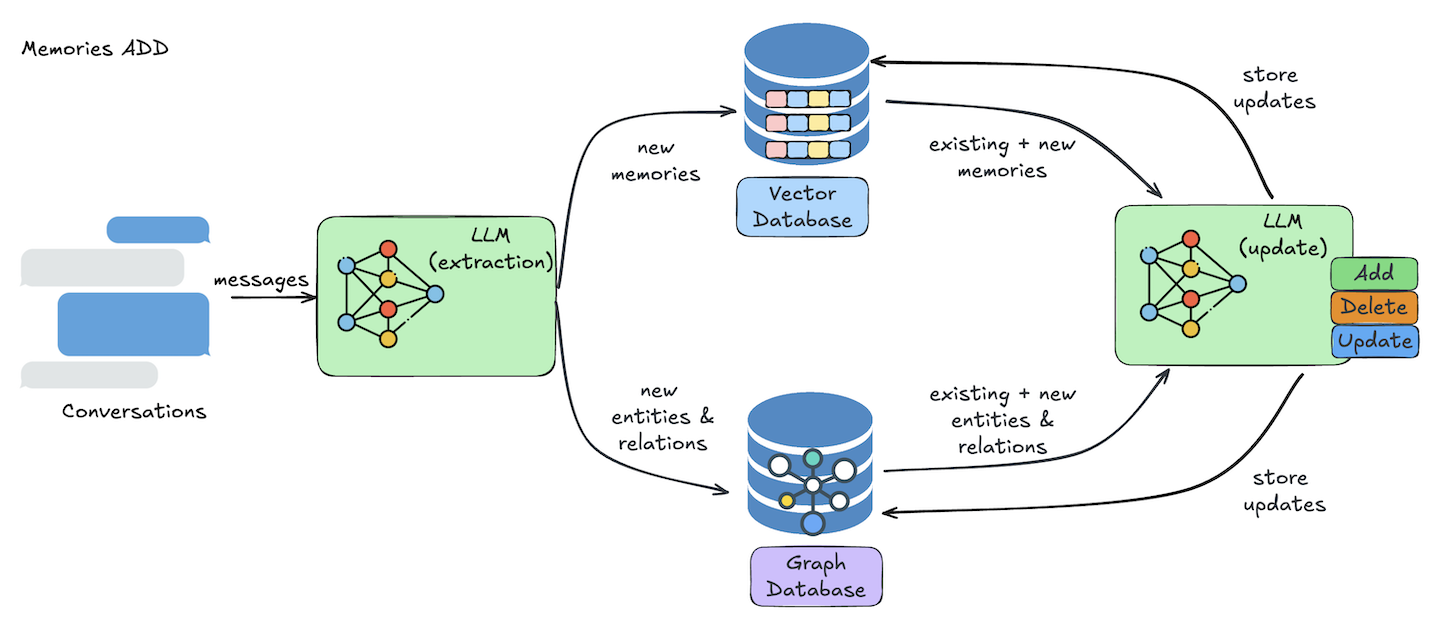 The add operation processes conversations through several steps:
1. **Information Extraction**
* An LLM extracts relevant memories from the conversation
* It identifies important entities and their relationships
2. **Conflict Resolution**
* The system compares new information with existing data
* It identifies and resolves any contradictions
3. **Memory Storage**
* Vector database stores the actual memories
* Graph database maintains relationship information
* Information is continuously updated with each interaction
### Searching Memories
The add operation processes conversations through several steps:
1. **Information Extraction**
* An LLM extracts relevant memories from the conversation
* It identifies important entities and their relationships
2. **Conflict Resolution**
* The system compares new information with existing data
* It identifies and resolves any contradictions
3. **Memory Storage**
* Vector database stores the actual memories
* Graph database maintains relationship information
* Information is continuously updated with each interaction
### Searching Memories
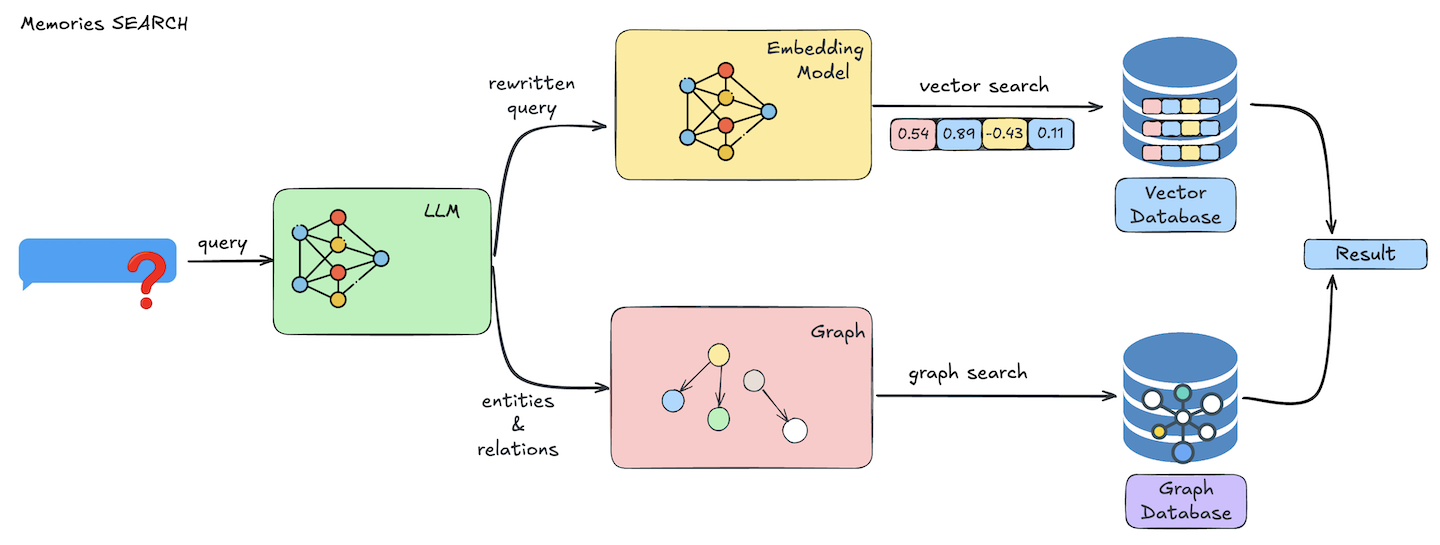 The search operation retrieves memories through a multi-step process:
1. **Query Processing**
* LLM processes and optimizes the search query
* System prepares filters for targeted search
2. **Vector Search**
* Performs semantic search using the optimized query
* Ranks results by relevance to the query
* Applies specified filters (user, agent, metadata, etc.)
3. **Result Processing**
* Combines and ranks the search results
* Returns memories with relevance scores
* Includes associated metadata and timestamps
This semantic search approach ensures accurate memory retrieval, whether you're looking for specific information or exploring related concepts.
The search operation retrieves memories through a multi-step process:
1. **Query Processing**
* LLM processes and optimizes the search query
* System prepares filters for targeted search
2. **Vector Search**
* Performs semantic search using the optimized query
* Ranks results by relevance to the query
* Applies specified filters (user, agent, metadata, etc.)
3. **Result Processing**
* Combines and ranks the search results
* Returns memories with relevance scores
* Includes associated metadata and timestamps
This semantic search approach ensures accurate memory retrieval, whether you're looking for specific information or exploring related concepts.